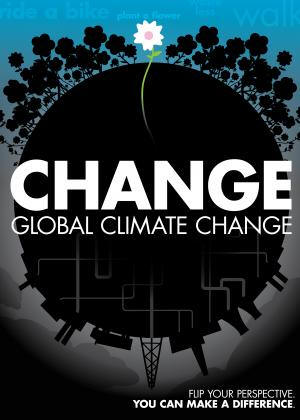
Global Climate Change Education
 |
 |
 |
 |
 |
Department of Teaching and Learning
College of Education
Florida Atlantic University
EDG 5931: Special Topics – Global Climate Change Education
Class and Contact Information:
Location: Gumbo Limbo Nature Center, Boca Raton, FL (http://www.gumbolimbo.org/)
In-person Dates:
Thursdays 1/14, 1/28, 2/11, 2/25, 3/18, 4/8, and 4/22. Time:
6-8:50PM
|
Contact
Information
Dr. Julie Lambert
Office Phone (561) 297-0082
Cell Phone (786) 877-6168
Email:
jlambert@fau.edu
John Hargis, Director of Education
johnwhargis@yahoo.com
Evan Orellani, Educator and Research
"e_orellan@hotmail.com"
|
Office
Hours:
Tuesdays and Thursdays 10 - 1 PM, and 4:00 –
6PM
Online: Most nights from 9-10PM
Or by
Appointment |
Course Description:
3 semester hours.
A review of factors that affect weather and climate; methods for
studying climate change; natural and human-related causes of climate
change; global and local environmental, ethical, societal, and economic
impacts, renewable energy and sustainable development; and curricula and
instructional methods for teaching global climate change.
Required Texts:
American Meteorological Society. (2009). Climate Studies:
Introduction to Climate Science.
American Meteorological Society. Washington, DC. AMS Website:
http://www.ametsoc.org/amsedu/online/index.html
Henson, R.(2008). The Rough Guide
to Climate Change: Symptoms, Science and Solutions.
New York, NY: Rough Guides Limited.
Schneider, S. (2009). Science as a
Contact Sport: Inside the Battle to Save Earth’s Climate.
National Geographic Society.
Washington, DC.
http://stephenschneider.stanford.edu/SAACS/saacs_book.htm
Suggested Climate Change Books:
Craven, G.
What’s the Worst
that Could Happen? A Rationale Response to the Climate Change
Debate.
New York, NY:
Penguin Group (USA) Inc.
Faris, A. (2009).
Forecast:
The Consequences of Climate Change from the Amazon to the Arctic,
from Darfur
to Napa Valley.
New York: NY: Henry Holt and Company, LLC.
Flannery, T. 2005.
The
Weather Makers: How Man is Changing The Climate and What it Means
It Means For
Life on Earth. New York, NY: Grove Press.
Friedman, T. (2008).
Hot,
flat, and crowded. New York, NY: Farrar, Straus, and Giroux.
Gore, A. (2006).
An
Inconvenient Truth. New York, NY: Rodale.
Gore, A. (2009).
Our Choice.
New York, NY: Melcher Media.
Krup, F. & Horn, M. (2008).
Earth: The sequel. New York, NY: Environmental Defense Fund.
Lovelock, Gaia (2006). The revenge of Gaia: Earth’s climate crisis
and the fate of humanity.
New York, NY: Basic Books.
Mooney, C. 2007.
Storm World:
Hurricanes, Politics, and the Battle Over Global Warming.
Orlando, FL: Harcourt Inc.
Weisman, A. (2007).
The world
without us. New York, NY: St Martin’s Press.
Science Education
Elementary Science Education
Cothron, J. Giese, R. & Rezba, R. (1996).
Science Experiments by the Hundreds. Kendall
Hunt.
(Teacher Edition).
Liem, T.L. (1987).
Invitations to Science Inquiry,
about $45 from Amazon.com.
Rezba, R. J., Sprague, C., McDonnough, J. T., Matkins, J. (2007).
Learning and Assessing Science
Processes
Skills.
Dubuque, Iowa: Kendall Hunt.
Settlage, J. & Southerland, S.A., (2007). Teaching Science to Every
Child: Using Culture as a
Starting Point. New York, NY:
Routledge. (ISBN# - 0-415-95637-4).
Secondary Science Education
Chiapetta, E.L., &
Koballa, Jr, T.R. (2005). Science Instruction in the Middle and
Secondary Schools. (6th ed.)
Pearson Education, Inc. Upper Saddle River, NJ: Merrill Publishing an
imprint of Prentice-Hall.
Cothran, J. Giese, R, & Rezba, R., Students and Research: Practical
Strategies for Science
Classrooms and Competitions.
Kendall Hunt.
Llewellyn, D. (2005). Teaching high school science through inquiry.
Thousand Oaks, Corwin
Press and Arlington, VA, NSTA
press.
Supplemental Texts: (recommended for students
interested in developing curriculum for both formal and non-formal
environmental education programs at all levels)
McTighe, J. & Wiggins, G. (2004). Understanding by design:
Professional workbook.
Association for Supervision
Curriculum Development (ASCD).
Alexandria, VA.
Wiggins, G. & McTighe, J. (2000). Understanding by design: Study
guide. Association for
Supervision Curriculum Development
(ASCD). Alexandria, VA.
GUIDELINES USED IN DEVELOPING COURSE
OBJECTIVES:
Florida Science Standards
http://learningcenter.nsta.org/state.aspx?action=start&state=FL
(Easiest way to view) or
http://www.fldoestem.org/page231.aspx
Access Points
http://www.floridastandards.org/Standards/AccesspointSearch.aspx
AAAS Benchmarks for Science Literacy
%2Eedu%2Ftaylorar%2F&txtURIOld=%2Ftools%2Fbenchol%2Fbolframe%2Ehtm
National Science Education Standards
http://www.nsta.org/publications/nses.aspx
http://www.climatescience.gov/Library/Literacy/
Guidelines for
K12 Global Climate Change Education (National Wildlife Federation and the North American Association for
Environmental Education)
http://online.nwf.org/site/PageNavigator/ClimateClassroom/cc_naaee_guidelines
Course Objectives:
Global climate change has become a
major issue affecting our planet. In this special topics course,
students will learn about the
-
factors
that affect weather and climate;
-
methods
for studying climate change;
-
natural
and human-related causes of climate change;
-
global
and local environmental, ethical, societal, and economic impacts
-
renewable energy and sustainable development; and
-
curricula and instructional methods for teaching global climate
change.
The course
will incorporate a pilot program, American Meteorological Society’s
Online Climate Studies Curriculum,
This program was funded by NASA and includes a textbook, an
investigations manual, and an online website that is updated on a daily
basis. Each chapter includes two investigations that lead course
participants through the analysis and interpretation of
real-world climate data and information.